


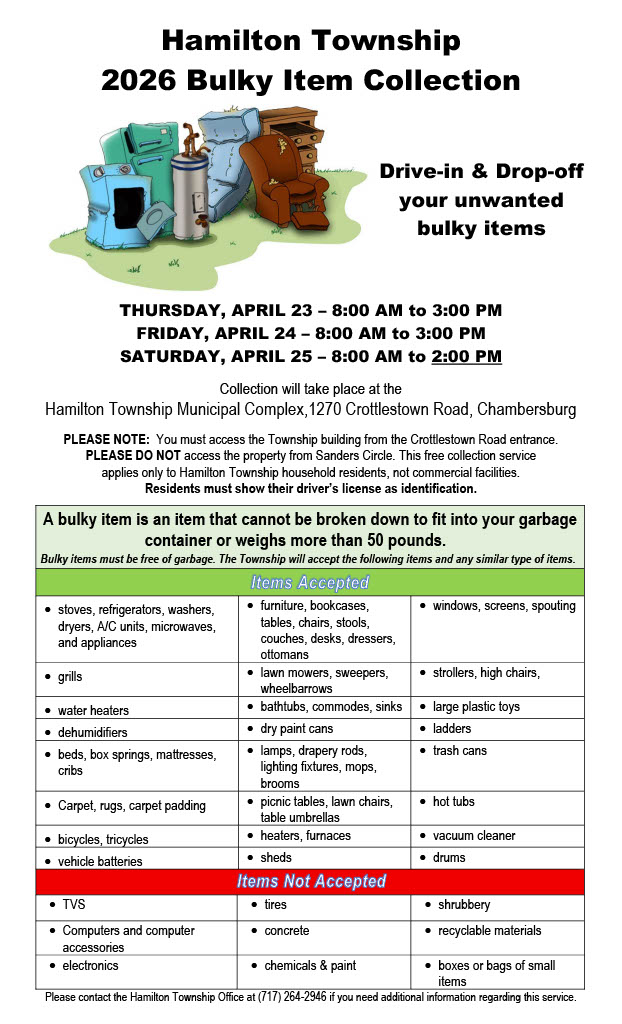
Hamilton Township Bulky Item Drop-Off
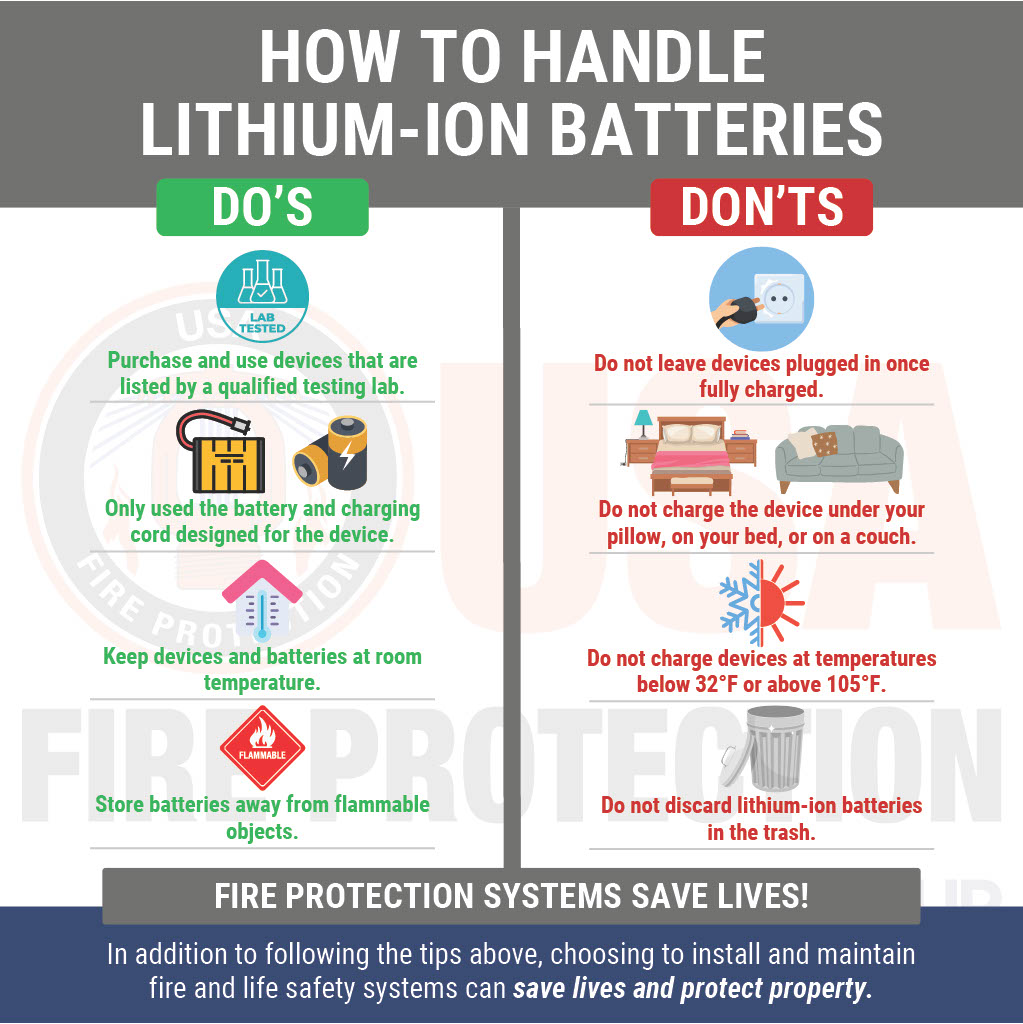
Lithium-ion battery safety
Stormwater in Hamilton Township, Franklin County, discharges to portions of Rocky Spring Branch, Back Creek and Conococheague Creek, all of which are tributary to the Chesapeake Bay Watershed. This watershed has been identified as impaired by siltation and nutrients (phosphorus and nitrogen).
The PA Department of Environmental Protection has required many municipalities across the state to reduce siltation and nutrients by a minimum of 10%. Each year a report is submitted to DEP showing what Hamilton Township did to reduce and/or eliminate sediment and pollution.
MS4 – WHAT’S THAT AND WHAT’S IT GOT TO DO WITH ME?
MS4 is the abbreviation for Municipal Separate Storm Sewer Systems. This is a term for the retention basins, ditches, roadside inlets and underground pipes that carry stormwater through properties and under roads and discharge it, without treatment, into local streams and rivers. It is not connected to the sanitary sewer system which drains waste water from inside a home to a sewage treatment facility or a private septic system.
While there are large projects that Hamilton Township can undertake to help in reaching this goal, there are many simple things that home owners can do too.
Keep following our articles in this section to learn how you can do your part in improving the storm water in Hamilton Township, Franklin County.
Rainwater Catchment Systems Help Reduce Stormwater Impacts
Downspout planters, rain barrels, and cisterns capture rainwater to be utilized for a variety of needs.
Justin Mansberger
Extension Educator, Water and Master Watershed Steward Coordinator
Excess stormwater is a major concern among homeowners and municipal officials as it can lead to many problems, including flooding and pollution concerns. This stormwater runs off impermeable surfaces — roofs, parking lots, and other hard surfaces — picks up various pollutants and carries them into our storm drains and water bodies. As a result of this excess impermeable surface, stormwater has become the primary source of pollutants entering our local waterways. This has led to an increasing need to counteract and reduce the pollution and flooding issues associated with stormwater runoff. One of the best ways to do this is to implement green stormwater infrastructure (GSI). These physical devices can help control the volume, rate, and/or quality of stormwater runoff, and one example is rainwater catchment systems.
A common GSI category that many Pennsylvania residents have installed is a rainwater catchment system. These systems capture rainwater to prevent it from contributing to stormwater issues. The captured water can be utilized for various uses depending on the type of system installed. Some of the most common residential rainwater catchment systems are rain barrels, downspout planters, and cisterns. Typically, these best management practices involve installing a downspout diverter to direct water from a downspout into the catchment system. All help reduce runoff rates and manage pollution from stormwater.
Rain barrels are containers that collect rainwater for a variety of potential uses. They are typically 55-gallon HDPE plastic barrels but can vary in material and size. Rain barrels are great for conserving water, which can reduce the water bill for households on public water or reduce drawdown during droughts for households with a private water well. The water from a barrel can be used for various purposes, including watering gardens and lawns, washing cars, cleaning windows, and many others. However, this water should never be used as a source of drinking water as it is likely to be contaminated with leaf litter, bird droppings, or other contaminants.
Cisterns function similarly to rain barrels by storing water for later use, but they differ in size and, oftentimes, purpose. Cisterns are generally much larger in size and can be found above or below ground. They are most commonly constructed of cinder block, concrete, or plastic, and sizing will depend upon the roof catchment area and daily water intake. Some cisterns are utilized very similarly to rain barrels, except they provide a larger storage area. The primary difference between cisterns and rain barrels is that cisterns are often used as a source of drinking water. These can be particularly useful in locations without suitable surface or groundwater resources. However, cistern water usually contains contaminants like bacteria, so getting the water tested and treated is important to ensure it meets drinking water standards.
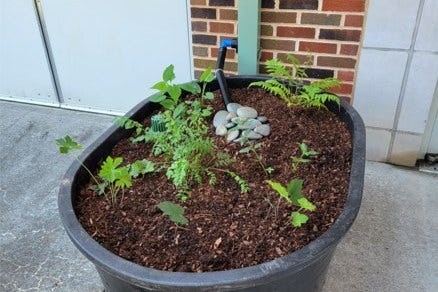
The last common residential rainwater catchment system is downspout or “flow-through” planters. These Best Management Practices (BMPs) operate as “self-watering” systems by directing rainwater from the downspout into the box containing plants, often beautiful perennial flowers. Downspout planters can vary in material and size and require slightly different preparation and installation methods. However, they are typically larger than rain barrels and can capture from 50 to 100 gallons of stormwater or larger. Unlike rain barrels and cisterns, downspout planters do not generally store water for later use but have a variety of other benefits, including beautification and aesthetic appeal, as well as helping to attract pollinators.
 Hamilton Township, Franklin County, PA